web analytics
Skip to content

To Summarise

20 hours of insights in 20 minutes

Search
  • Home
  • About
  • All Summaries
  • Blog posts
  • Newsletter
  • Contact
  • T&Cs

To Summarise

20 hours of insights in 20 minutes

Close menu
  • Home
  • About
  • All Summaries
  • Blog posts
  • Newsletter
  • Contact
  • T&Cs

To Summarise

20 hours of insights in 20 minutes

Search Toggle menu

Author: To Summarise

December 12, 2022July 7, 2024Uncategorized

Four Thousand Weeks – 10 Practical Tools to Help Embrace Your Finitude

In the Appendix to Four Thousand Weeks, Burkeman sets out 10 practical tools that will help you embrace your finitude

December 12, 2022July 7, 2024Uncategorized

Four Thousand Weeks – Five Questions to Ask Yourself

In Four Thousand Weeks, Oliver Burkeman suggests asking yourself these five questions to make his ideas more concrete. The five questions are […]

November 27, 2022July 7, 2024Book Summary

Book Summary: How to Read a Book by Mortimer Adler and Charles Van Doren

Book Cover for How to Read a Book by Mortimer Adler and Charles Van Doren

Think you already know how to read? Think again. In this summary of How to Read a Book, I take you through […]

November 26, 2022July 7, 2024Uncategorized

Mortimer Adler’s Reading List from “How to Read a Book”

In How to Read a Book, Mortimer Adler and Charles Van Doren put forward a recommended reading list, of truly great books […]

November 26, 2022July 7, 2024Uncategorized

Analytical Reading (from “How to Read a Book”)

Here I summarise the 11 rules of analytical reading, from How to Read a Book by Mortimer Adler and Charles Van Doren. […]

November 24, 2022July 7, 2024Podcast Summary

Podcast Summary: EconTalk – Will MacAskill on Longtermism and What We Owe the Future

Will MacAskill discusses longtermism and his book What We Owe the Future with Russ Roberts in this EconTalk podcast.

November 21, 2022July 7, 2024Podcast Summary

Podcast Summary: EconTalk – David McRaney on How Minds Change

The traditional information deficit hypothesis thought you could change people’s minds by giving them facts. That hypothesis turned out to be wrong.

November 7, 2022July 7, 2024Book post

The 48 Laws of Power is Not a “How To” Book

The 48 Laws of Power is written like a “how to” book, but should not be read as such. If read that way, it’s a terrible book. Not only does it encourage you to be an awful person, it doesn’t give much guidance on how to apply the laws in practice.

November 5, 2022July 7, 2024Book post

Should we even seek power?

A question that The 48 Laws of Power does not address is whether you should even seek power – and what lengths you should go to to seek it. Greene assumes that everyone wants power and that more is better. He’s wrong.
November 5, 2022July 7, 2024Book Summary

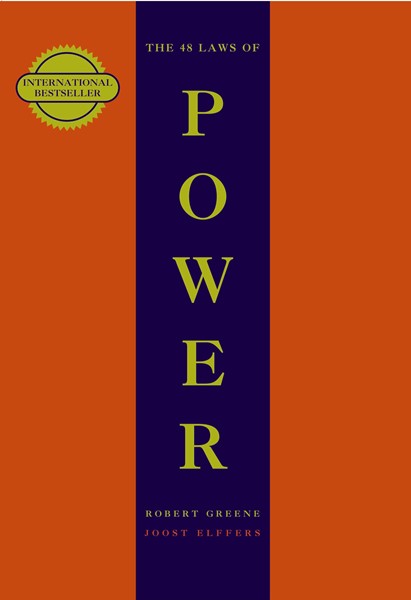
Book Summary: The 48 Laws of Power by Robert Greene

Book Cover for The 48 Laws of Power

This summary of The 48 Laws of Power outlines every law in Robert Greene’s book. Each chapter of the book establishes one […]

Posts pagination

< 1 … 12 13 14 … 17 >
RSS feed

Join my newsletter

    Built with ConvertKit
    Shout me a coffee

    Recent Summaries

    • Book Summary: Kaput by Wolfgang Münchau
    • Book Summary: This is for Everyone by Tim Berners-Lee
    • Book Summary: The 12 Levers by Greenberg and Stevenson
    • Book Summary: If Anyone Builds It, Everyone Dies by Yudkowsky and Soares
    • Book Summary: Attached by Levine and Heller

    Recent Blogs

    • Fact-checking Kaput by Wolfgang MünchauOctober 11, 2026
    • My thoughts on AI killing us allAugust 15, 2026
    • Criticisms of Why Nations FailMarch 27, 2026
    • Fact-checking an AI optimist article in The EconomistFebruary 23, 2026
    • 2025 Round-upDecember 30, 2025

    Tags

    AI business classics decision-making economics effective altruism foreign policy history language logic motivation philosophy PKM policy psychology public speaking relationships science self-improvement sociology technology writing

    © 2026 To Summarise. Proudly powered by Sydney. View our Terms and Conditions here.